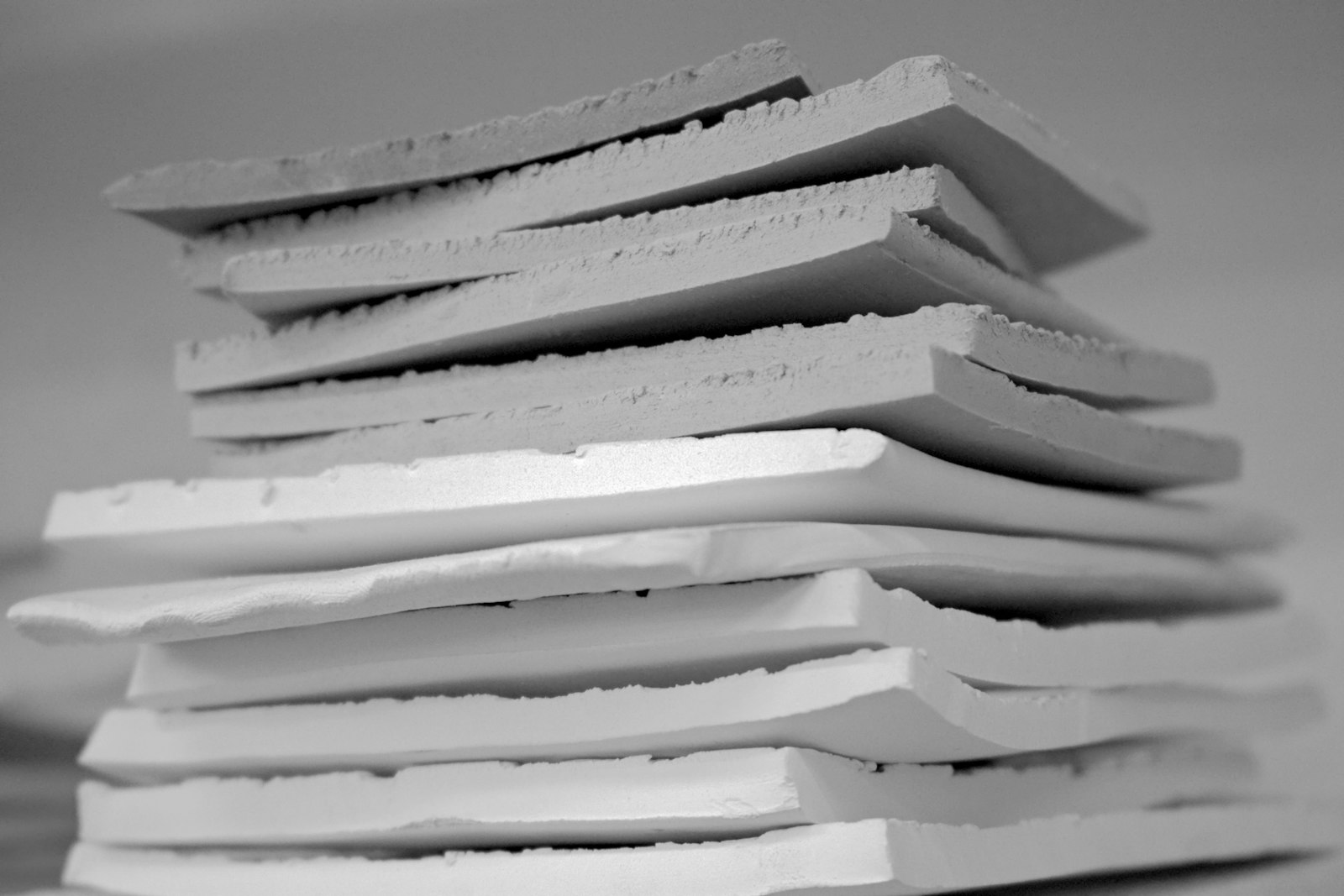
Home / Products
Expandable Polystyrene (EPS)
Also called Thermapore. Supplied as blocks, sheets, cut-to-size shapes and raw beads, in the density your application actually needs.
The material
What Expandable Polystyrene is
EPS begins as small polystyrene beads containing a blowing agent. Steam expands them to many times their original size, and they are then moulded into rigid blocks of closed cells that are up to 98% air.
Air is a poor conductor of heat, and in EPS it is locked into millions of sealed cells where it cannot circulate. That is the whole principle: a board that is almost entirely air, but stiff enough to walk on and light enough to lift with one hand.
Because the cells are closed, EPS absorbs very little water, which matters in Pakistan’s climate — insulation that soaks up moisture stops insulating.

Product forms
Four ways we supply it
Blocks
Large moulded blocks, supplied whole for your own cutting line or as the stock we cut from.
Sheets & boards
Cut to the thickness you specify for roofs, walls, floors and sandwich panels.
Cut-to-size shapes
Profiles, fillets and moulded packaging shapes cut to a drawing or a sample.
Raw beads
Unexpanded resin for moulders running their own pre-expanders and block lines.
Sizes
Sheets are commonly supplied at 8ft × 4ft (2440 × 1220 mm) and 1000 × 500 mm, in thicknesses from roughly 12 mm to 100 mm and thicker on request. Blocks are cut down to any of these.
Non-standard dimensions are normal rather than exceptional — send the sizes you need and we will quote against them.
Densities & grades
Choosing a density
Density drives both insulating value and load capacity. Heavier grades insulate a little better and carry much more weight — so the right choice depends on what sits on top of the board.
| Grade | Nominal density | Thermal conductivity | Compressive strength at 10% deformation |
Typically used for |
|---|---|---|---|---|
| EPS 10 | 10–12 kg/m³ | ~0.038 W/m·K | ~50–70 kPa | Void forming, false ceilings, light packaging |
| EPS 15 | 15 kg/m³ | ~0.037 W/m·K | ~70–90 kPa | General wall and roof insulation, packaging |
| EPS 20 | 20 kg/m³ | ~0.035 W/m·K | ~100–120 kPa | Cold-room panels, under-roof insulation, poultry sheds |
| EPS 25 | 25 kg/m³ | ~0.034 W/m·K | ~140–150 kPa | Floor insulation, cold storage walls and ceilings |
| EPS 30 | 30 kg/m³ | ~0.033 W/m·K | ~180–200 kPa | Load-bearing floors, heavy-duty cold store floors |
| EPS 35+ | 35 kg/m³ and above | ~0.032 W/m·K | ~240 kPa and above | Structural fill, car-park decks, high-load applications |
Figures above are indicative values for guidance. Exact properties are confirmed against the specification for your order — ask us for the batch data sheet.
Technical properties
How EPS behaves
| Closed-cell content | Greater than 95% — the reason water and heat move through it so slowly |
| Water absorption | Typically under 3% by volume on long immersion |
| Service temperature | Stable in continuous use from well below freezing up to about 75 °C |
| Dimensional stability | Around ±0.5% once properly conditioned after moulding |
| Chemical resistance | Resists water, salt solutions, acids and alkalis; attacked by solvents and petroleum products |
| Fire behaviour | Standard EPS is combustible. A flame-retardant (FR) grade is available and is what we recommend for building work — it is self-extinguishing, though it must still be installed behind a suitable protective lining. |
| Biological | Does not rot and provides no nutrient value to mould or vermin |
| Recyclability | Fully recyclable; clean offcuts can be reprocessed rather than discarded |
Applications
Where it is used
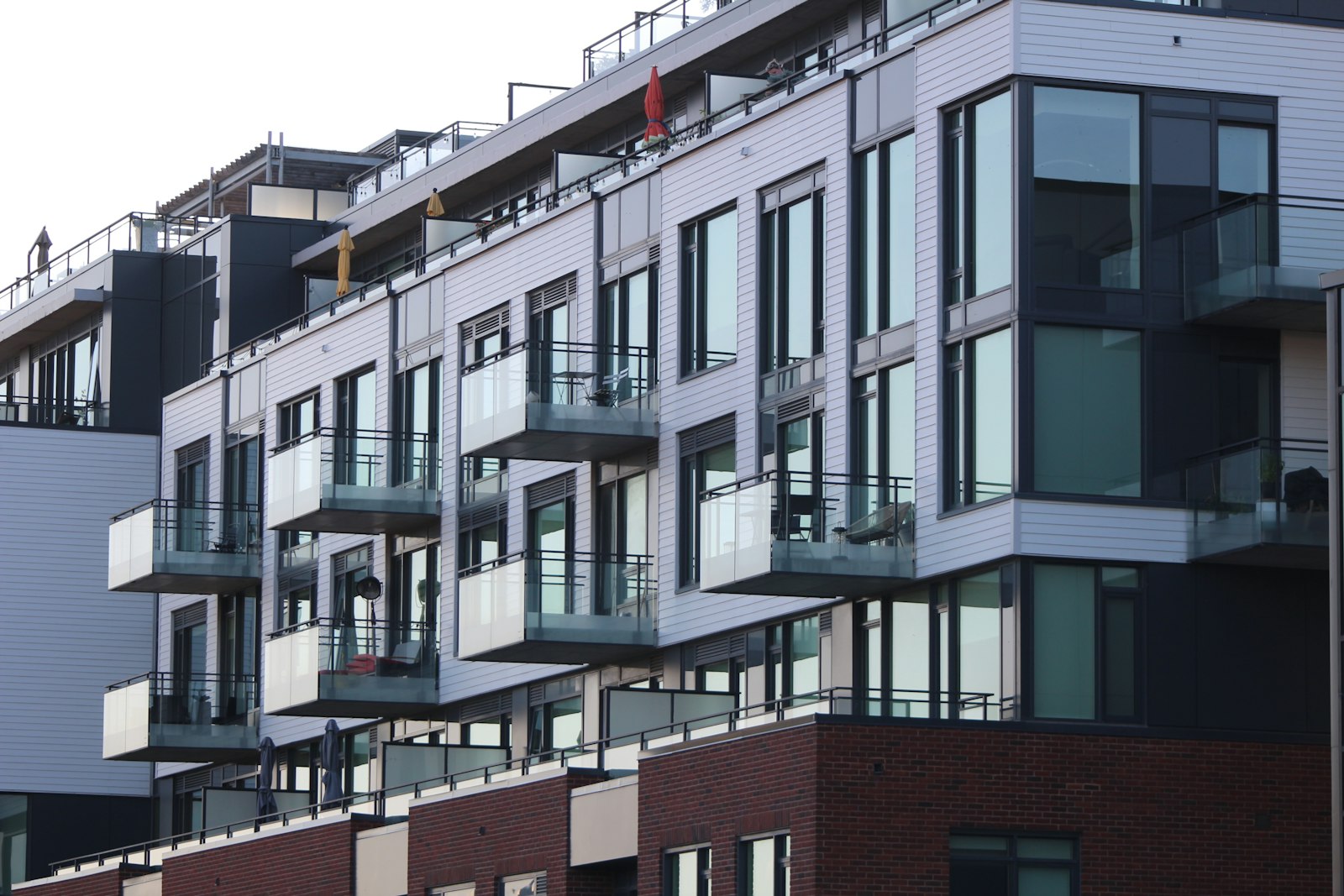
Houses & buildings
The largest heat gain in most Pakistani buildings comes through the roof. A layer of EPS under the roof slab, or above it beneath the screed, makes a difference you can feel in the top-floor rooms on a summer afternoon.
- Roof slab insulation, above or below the deck
- Cavity and external wall insulation
- Sandwich panels for prefabricated construction
- False ceilings and partition cores
- Lightweight fill over weak ground and on terraces
Cold storage & the cold chain
In a cold store the insulation is not a comfort measure — it is the single biggest factor in the running cost. Every watt of heat that leaks in has to be pumped back out by the refrigeration plant, around the clock.
- Cold-room wall, ceiling and floor panels
- Insulated doors and partitions
- Refrigerated transport bodies
- Fish, dairy, produce and pharmaceutical storage
- Higher densities where fork-lift traffic runs on the floor

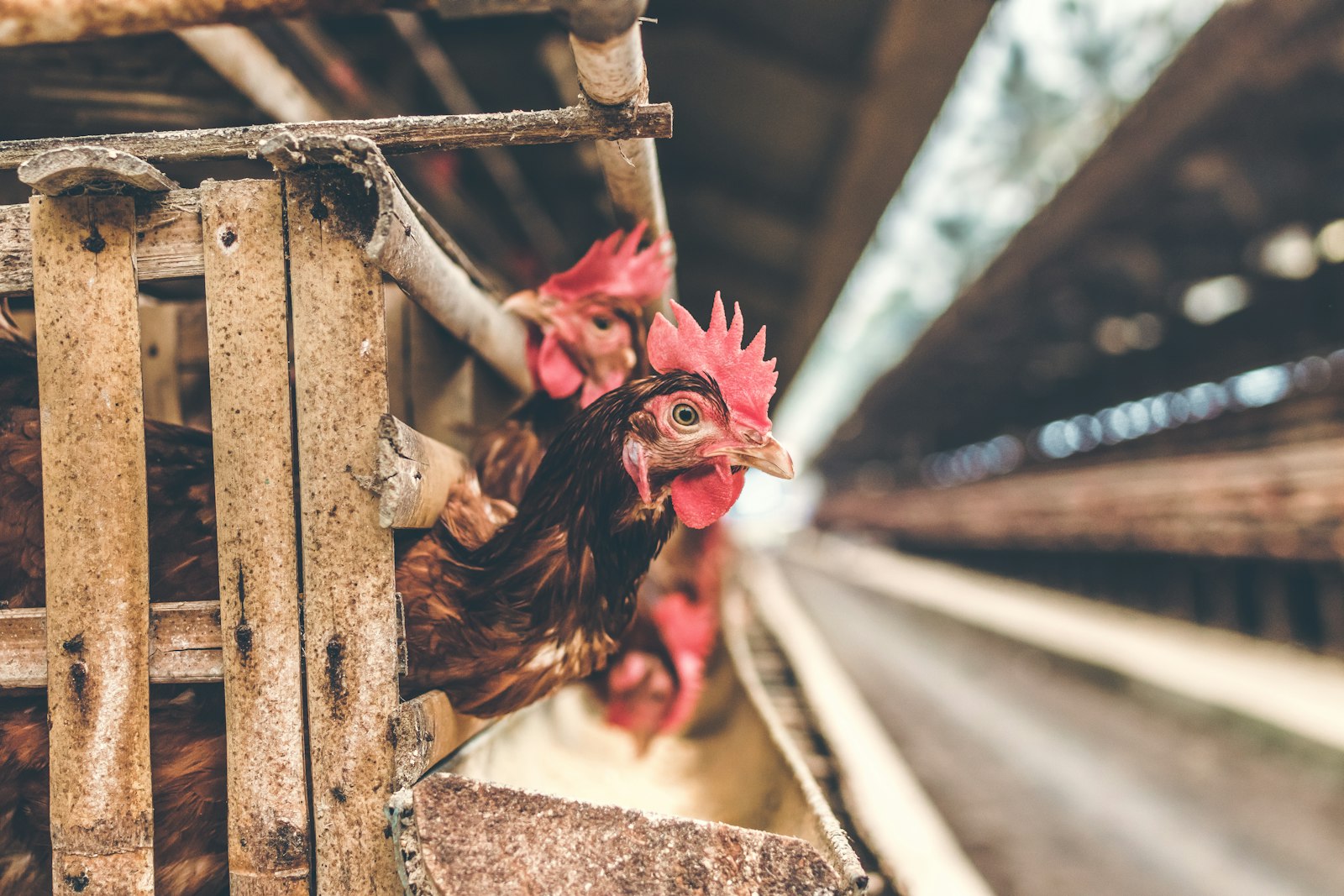
Poultry sheds
Birds are sensitive to temperature swings, and an uninsulated shed follows the outside air almost exactly. Insulating the roof and ceiling flattens that curve, which shows up in feed conversion, mortality and the cost of running fans and heaters.
- Roof and ceiling insulation for broiler and layer sheds
- Steadier shed temperature through summer and winter
- Lower load on tunnel ventilation and brooding heaters
- Wipe-clean surfaces when faced with sheet or render
- Does not rot or harbour mould
Protective & thermal packaging
The same two properties — shock absorption and insulation — make EPS the default for anything fragile or temperature-sensitive in transit.
- Moulded end-caps and corner protection for appliances and electronics
- Insulated boxes for fish, fruit, vegetables and pharmaceuticals
- Void fill and custom cut inserts
- Light enough to keep freight costs down
Not sure which grade you need?
Tell us the application, the area and what the insulation has to carry. We will recommend a density and thickness, then quote it.